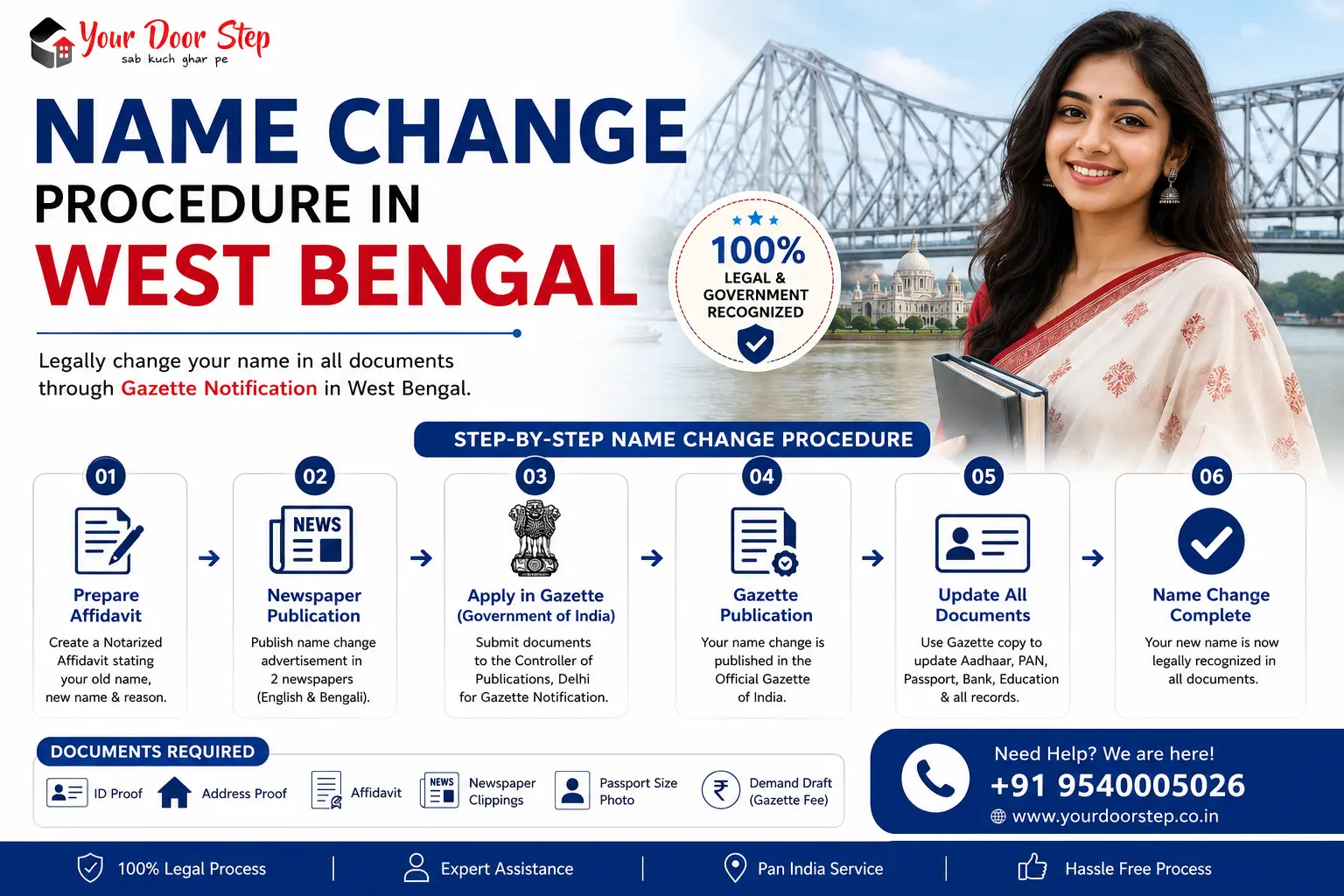
Step 1: Make the name change affidavit
An affidavit is a short legal statement on non-judicial stamp paper. It lists your old name, new name, address, father's or husband's name and the reason for the change. In West Bengal the statutory stamp duty on an affidavit is Rs 10, per the Directorate of Registration & Stamp Revenue's own schedule.
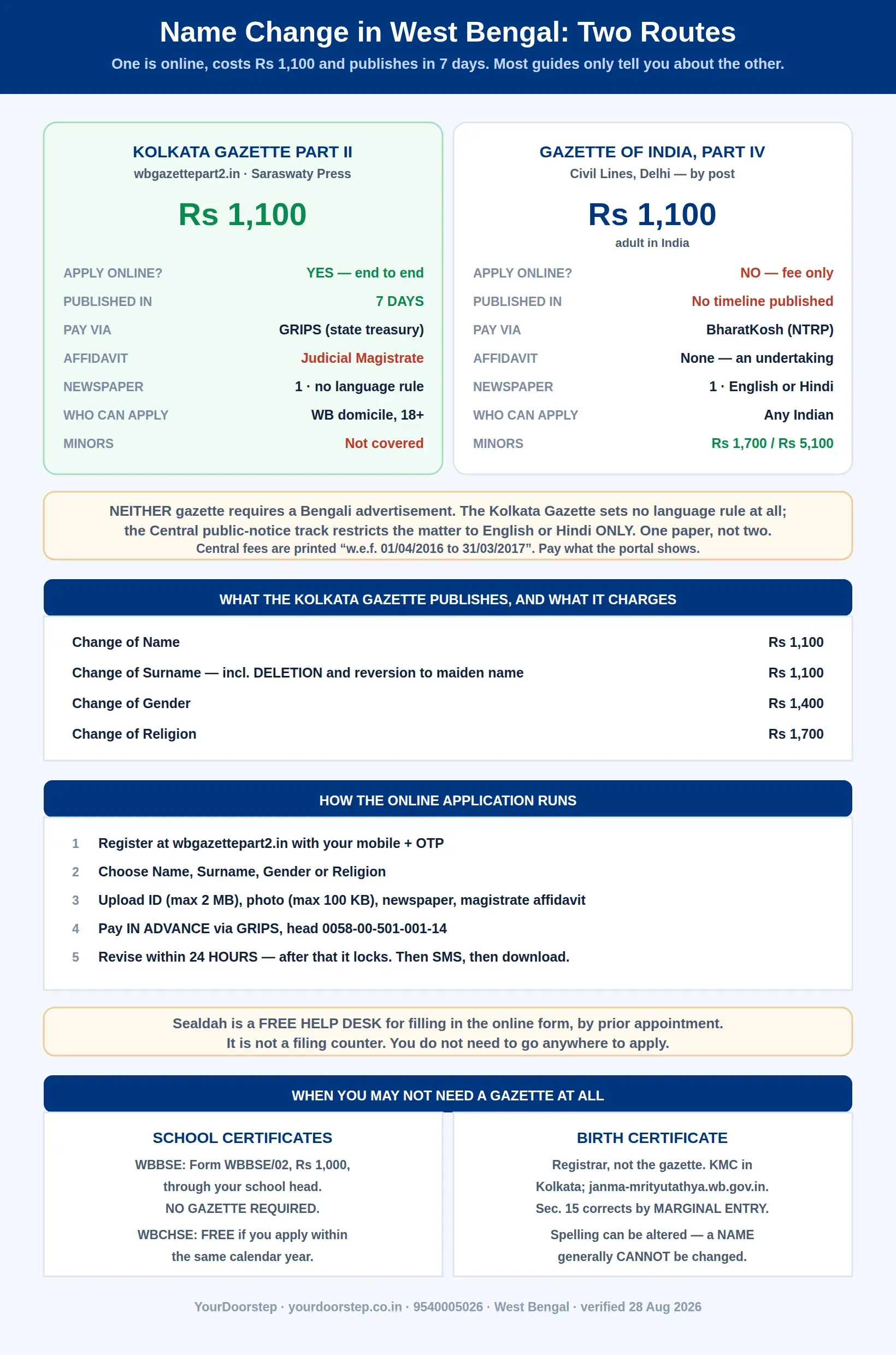
Who attests it is the single most important decision on this page, and almost every guide gets it wrong. For the Kolkata Gazette the guidelines say, verbatim, "Scanned copy of original affidavit duly attested by first class Judicial Magistrate". A notarised affidavit is not what the state asks for, and this page said "notary" until this update. That is not a West Bengal quirk either, WBBSE also requires an affidavit "sworn before a first class Judicial Magistrate", and CISCE requires one "SWORN-in before First-Class Magistrate". West Bengal institutions consistently want a magistrate.
And the Central route wants something different again. The Department of Publication's seven-item checklist contains no affidavit at all, it asks for "an undertaking duly signed by the applicant". A deed attested by an Indian embassy is needed only if you are applying from abroad, and a separate MHA deed applies to central government employees. So: magistrate affidavit for the state route, signed undertaking for the central one.
One thing we removed. An earlier version of this page said stamp paper is "usually Rs 10 to Rs 20 in West Bengal" and that stamp paper plus notary costs "about Rs 100 to Rs 300". Only the Rs 10 statutory duty is verifiable. We also could not find a single West Bengal government source publishing a notary's or oath commissioner's fee, or an official list of where notaries sit in Kolkata, so we are not naming Bankshall Court, the High Court or any other venue as "where to get your affidavit done". Ask at your district court for the Judicial Magistrate's oath section.
Step 2: Publish the change in a newspaper, one, not two
Both gazettes ask for one advertisement. The Kolkata Gazette wants "one recent advertisement on the subject in Daily Local national newspaper". The Central Gazette wants the change "advertised in one of the daily local leading newspapers stating therein Father's/Husband's name along with residential address". Neither says two.
And now the Bengali question, answered properly, because this page got it wrong before. Bengali is the state language, but neither gazette requires a Bengali advertisement. We checked the Kolkata Gazette guidelines expressly for language, Bengali, English and translation clauses, there are none. Worse, the Central Gazette's public-notice and name-and-gender guidelines affirmatively restrict the matter to "Hindi or English language only". So a Bengali-only clipping is a real risk on the Central route. If you are taking the Central route, advertise in English. If you are taking the state route, either is fine.
Papers that circulate in West Bengal and carry change-of-name classifieds include Anandabazar Patrika, Bartaman, Sangbad Pratidin, Aajkaal and Ei Samay in Bengali, and The Telegraph, The Statesman and The Times of India in English. The notice should carry your old name, new name, address, father's or husband's name and the affidavit date.
No newspaper is government-approved for this. The West Bengal Information & Cultural Affairs Directorate's empanelment covers government advertising; it makes no provision for private legal notices. Treat any "approved newspaper list" you are shown as marketing. Keep the complete original page with the masthead and date readable, a cutting where the date cannot be read is treated as invalid.
Step 3: Get the gazette notification
Now the file goes to the Department of Publication, Civil Lines, Delhi. It includes the affidavit, the newspaper pages, a typed proforma with two witnesses, a soft copy on CD in MS Word, two passport photos, ID proof, and the BharatKosh fee receipt. Your notice is printed in Part IV of the Gazette of India, published every Saturday. You then download the PDF from egazette.gov.in. That PDF is your legal proof and needs no stamp or attestation.
A quick note on order: some websites list the newspaper ad before the affidavit. In real practice the affidavit comes first, because both the newspaper ad and the gazette file copy their details from it. Get the affidavit right, and the rest falls into place.